


The Ultimate Guide to Windbreaker Jackets: Styles, Features, and Customization
By: YouApparel Posted on: Apr 24, 2026This comprehensive guide explores windbreaker jackets as essential, lightweight outerwear designed specifically for wind resistance and light rain protection. Manufacturers construct these highly packable garments using durable materials like nylon and polyester to offer varying degrees of breathability and water resistance. These jackets come with a lot of functional features that appeal to various demographics, serving athletes, travelers, and outdoor employees alike across transitional weather conditions. Furthermore, the smooth synthetic fabrics provide a great canvas for custom branding through screen printing, transfers, and embroidery. Businesses and individuals can easily source blank windbreakers for bulk customization through reliable wholesale apparel platforms like YouApparel. Ultimately, comparing windbreakers against heavy rain jackets helps buyers make highly informed purchasing decisions based on specific climate needs, material requirements, and budget constraints.
If you lack the right gear, even a morning breeze can ruin your outdoor plans. And by right gear, we mean the most commonly used apparel when going outdoors.
Windbreaker Jackets.
Unlike many styles in YouApparel’s wholesale jackets selection, these lightweight jackets are typically designed to be packable and are known for their versatility. By versatile, we mean they can be worn at the gym or when jogging or even at the site if you work in construction.
This guide will explore windbreaker jackets in detail, covering all the right features, common uses, and how it can be the best option for some specific needs.
What is a Windbreaker?
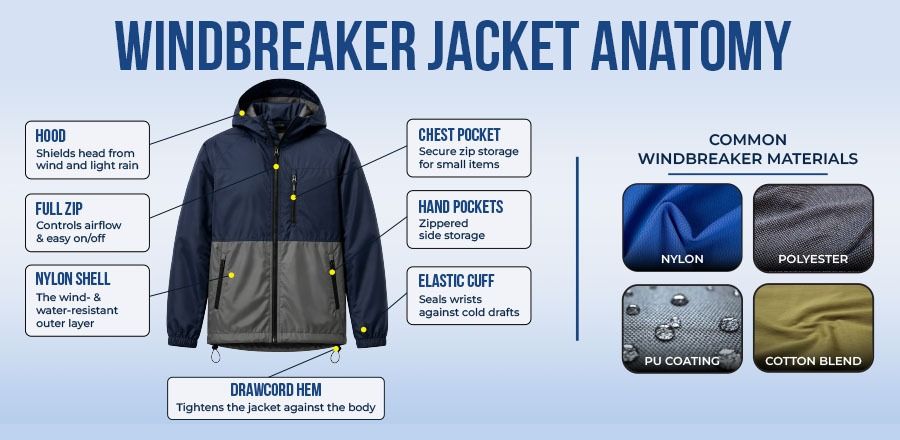
A windbreaker jacket is basically a jacket designed to be wind-resistant. It will have a thin outer coat to resist wind chill and light rain. The purpose is simple - block the cold wind from reaching your body. Wearing one can keep your core temperature stable, while you won’t feel the jacket being bulky or having heavy layers. It’s convenient, offers great mobility, and folds up easily into a bag or backpack. Windbreaker jackets can be used in varying climates.
Styles of Windbreakers
- With Hood: Hooded windbreakers also offer protection for the head and neck, and are meant to shield the wearer from sudden gusts and unexpected drizzles outdoors.
- Pocket Types: Almost all windbreakers in our selection come with pockets now to hold items, because they’re among the most needed utilities in jackets. Not all of them have pockets to keep fingers warm, though. Windbreakers with chest pockets allow wearers to store keys, a phone or something of that size. Top-quality styles come with zippered or velcro closures on pockets to keep valuables secure.
- Zip-Up: Full-zip and quarter-zip styles are what our customers seek most in our outerwear collection. Full zips are more convenient because it’s easy to remove and offer better airflow control. Quarter zips offer a sporty look yet are still adjustable in terms of fit.
- Drawcords: Drawcords at the waist and hood tighten the garment against your body, effectively sealing out cold drafts and providing a much better, tighter fit.
Fabrics and Materials
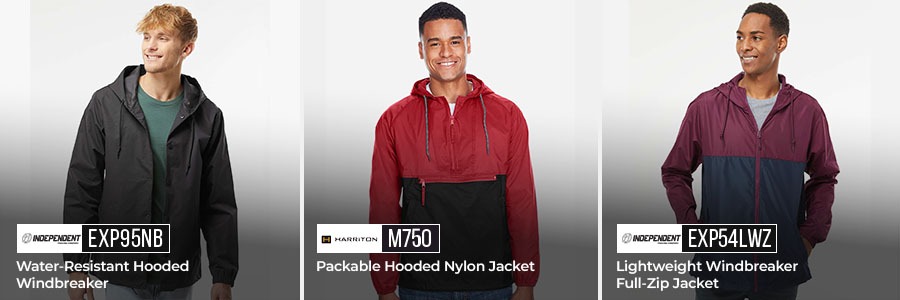
YouApparel offers windbreaker jackets from various manufacturers, including Core 365, Independent Trading Company, Harriton, and more. Manufacturers mainly use polyester, nylon, and cotton blends for these jackets. You can see nylon a lot on windbreaker fabrics because the material naturally resists wind well and is lightweight. Our top-selling EXP95NB Water-Resistant Hooded Windbreaker from Independent is 100% nylon, with inner PU coating for excellent breathability. The Harriton M750 is another excellent 100% nylon jacket with wind and water resistance.
Polyester is used in the fabric blend because of its durability and shape retention properties. Polyester also makes these jackets affordable. A great example of a well-crafted 100% polyester windbreaker jacket would be the EXP54LWZ Full-Zip Windbreaker, once again from Independent. You don’t see a lot of cotton blends anymore on windbreakers but cotton does bring some softness into the mix.
The point is that different fabrics deliver specific benefits based on how they are engineered.
Here’s a quick breakdown.
- Breathability allows sweat vapor to escape from the inside, preventing you from sweating inside the coat
- Water resistance causes light rain to bead up on the surface instead of soaking in
- Durability prevents tears from branches or rough handling in harsh environments
- Waterproof fabrics completely block moisture from entering, usually featuring taped seams.
- Water-resistant fabrics repel light moisture but eventually soak through in heavy rain.
These distinctions between fabric ratings are not clearly understood by many buyers, especially when they are buying windbreakers in bulk for their team.
Features from Top Brands and Their Offerings
Brands innovating to keep their products competitive isn’t anything new. But not many people know that most brands specialize in a particular aspect. This is true when it comes to windbreakers. Take Columbia, for instance, and their widely praised weather protection features and active fits. Independent Trading Co. in YouApparel is known for uncompromising comfort and great aesthetics even with handy features like water-resistant coatings, pockets, and tightening toggles. Almost all their windbreaker jacket styles, like the EXP54LWP Lightweight Pullover Windbreaker, feature a tear-away label for private labeling.
Key features vary across these brands. You will find differing levels of water resistance and breathability. Some jackets include specialized features like nylon taslan shells or a roll-away three-piece hood, or even UV sun protection for long outdoor exposure. Others incorporate fleece lining to trap body heat on colder days.
Windbreakers for Men, Women, and Youth
Though most windbreaker styles in our selection are unisex, some actually fit a specific gender better. Men's cuts typically feature broader shoulders and a straighter torso. Women's styles often incorporate a tapered waist and shorter hemline, like the EXP64CRP Lightweight Quarter-Zip Crop Windbreaker from Independent Trading Company. Adult options are more focused on functionality and high performance.
Youth windbreakers like the Youth Lightweight Full-Zip Windbreaker EXP24YWZ prioritize high durability and water-resistance, so young wearers can wear them anywhere outdoors. Kids need adjustable cuffs and roomy fits for growth spurts.
Why Windbreakers Are Used
Protection against the wind remains the top reason. Fabric is tightly woven so it stops the moving air from penetrating the clothing, essentially blocking the wind without overheating the wearer. Breathability is the second major factor as these jackets are meant to keep you comfortable in cool to mild temperatures. You can engage in high-energy activities without feeling trapped in a plastic bag.
Application in Different Industries and Weather Use Cases
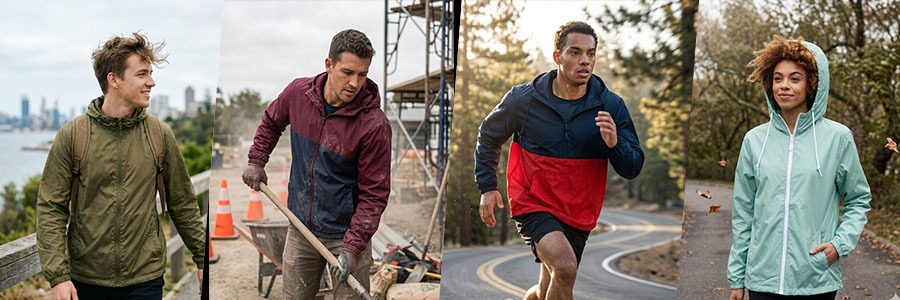
Travel: Travelers love windbreakers because they are pretty much zero weight to a suitcase and pack down small.
Outdoor Employees: Workers in construction, landscaping, and delivery get elemental protection without restricting physical movement.
Performance and Athletic: Runners and cyclists use windbreakers for training in the morning or when the weather is too breezy and chilly.
Weather Use Cases: They don’t find use in summer much and shine in transitional seasons, best suited for spring and fall.
Customization: How Windbreakers Can Be Customized
This is where YouApparel can make a difference for you, especially if you are bulk ordering custom windbreaker jackets wholesale. Every single style in our jacket selection is designed for customizability. And it’s not very hard to customize windbreakers with logos. Our custom orders for windbreakers come from businesses, sports teams, and schools for uniforming or merchandising. Because they are mostly made of synthetic fabrics, screen printing and embroidery works. Most of our orders are for logos on the left chest of the jacket.
You can use our store’s free, built-in Custom Design Creator tool to select your jacket style, virtually place your customizations, and get a preview of the design. The tool also allows you to request a quote for your custom requirement, or even create a design from scratch using over 10,000 free cliparts from its library without copyright.
Where to Buy Windbreakers
If the purpose is to outfit a team or for outdoor events, buying in bulk yields the best value. You can purchase windbreaker jackets in bulk from wholesale distributors like YouApparel at very competitive wholesale prices. We stock numerous styles, colors, and sizes to fit any specific requirement. Additionally, most jackets come with incredible bulk discounts, netting you more savings on bigger orders.
How to Buy a Windbreaker? What Do Buyers Care About?
We recommend considering a few important factors before purchasing.
- Fit: If you need room for layering, make sure you check the fit of the jacket
- Weather Resistance: Weather resistance comes in varying degrees depending on the jacket style and the manufacturing brand. Every windbreaker jacket will resist wind but how good they do it can be different. Some styles also offer water-resistance while some others have waterproof coatings.
- Durability: If the jacket is for rigorous outdoor use, you need really durable ones from brands reputed for the same.
- Breathability: If there will be a lot of physical activity involved like running and manual labor, you will need jackets that are breathable enough.
Workwear demands tough, tear-resistant nylon. General outdoor activities might just need a basic, packable layer.
Pricing of Windbreakers
Prices vary depending on the manufacturer, fabric technologies, and jacket features. Budget options in YouApparel range from $8.88 to $20, with many styles including ones from Independent offering an array of features with low price tags. Mid-tier jackets cost as low as $21.45 and $60, offering better water resistance and brand-name reliability. Premium options go as low as $100 per piece and feature advanced technical fabrics.
Washing and Maintenance
Washing a windbreaker correctly extends its lifespan. Always check the care label first.
Here are a few pointers.
- Fasten all zippers and loosen drawcords before washing.
- Use a gentle cycle with cold water and mild detergent.
- Avoid fabric softeners entirely.
- Hang the jacket to dry or use a low-heat tumble setting.
Keeping them clean and re-treating the water-resistant coating periodically keeps them looking good longer.
Best Colors to Avoid Dirt or Stains
Darker colors like black, navy, and charcoal hide dirt and minor stains well. We recommend these colors for workwear or intense outdoor activities. If you prefer lighter colors, spills can mess things up. Spot clean lighter-colored windbreakers immediately with mild soap and water. Rubbing the stain might push the dirt deeper into the fabric fibers. You can also find colorblocked windbreakers in our selection, including the popular Core 365 CE710 made of 100% polyester pongee and featuring reflective piping details.
Compare to Rain Jackets
Windbreakers and rain jackets serve different main purposes. Windbreakers offer water resistance, high breathability, and extreme lightness. Rain jackets provide complete waterproofing but often sacrifice breathability and add bulk.
*The waterproof and water-resistant features of a windbreaker jacket may vary depending on the product brand and price range, with higher-end options typically offering better protection and durability compared to basic, budget-friendly variants.Windbreaker
Light · packable · breathable
Rain Jacket
Waterproof · heavy-duty
Protection
| Feature | Windbreaker | Rain Jacket |
|---|---|---|
| Wind resistance |
Excellent
Core purpose — tightly woven shell blocks moving air
|
Good
Side-effect of waterproofing, not primary design
|
| Water protection |
Water-resistant*
Repels drizzle; soaks in heavy rain after ~20 min
|
Fully Waterproof*
Taped seams + DWR coating blocks downpours for hours
|
| Seam sealing | None Sewn but not sealed — moisture entry point |
Taped seams Heat-bonded tape — zero leakage guaranteed |
Comfort & wear
| Feature | Windbreaker | Rain Jacket |
|---|---|---|
| Breathability |
Very high
Sweat vapor escapes freely — no clammy feel during exercise
|
Low–moderate
Membranes trap sweat; Gore-Tex models fare better
|
| Weight | Ultra-light 150–300 g. Barely noticeable when worn |
Heavier 400–900 g due to membranes, taped seams & lining |
| Packability | Packs to palm size Self-packs into chest pocket or stuff sack |
Partial Folds down but still takes significant bag space |
| Warmth | Low (shell only) No insulation — relies on layering underneath |
Low–medium Some models add fleece lining for cool-weather use |
Material & build
| Feature | Windbreaker | Rain Jacket |
|---|---|---|
| Primary fabric | Nylon / Polyester Lightweight weave with optional PU inner coating |
Gore-Tex / eVent Multi-layer laminate with waterproof-breathable membrane |
| Durability |
Good
Handles daily wear; not for heavy brush or sharp objects
|
Very good
Thicker shell, reinforced zones for rugged outdoor use
|
| Customisation | Excellent Smooth surface — ideal for screen print & embroidery |
Limited Heat & pressure from printing can damage WP membrane |
Practical factors
| Feature | Windbreaker | Rain Jacket |
|---|---|---|
| Price range | $9 – $100 Budget $9; mid-tier $20–60; premium $60–100 |
$60 – $600+ Entry-level $60; Gore-Tex technical models $200–600+ |
| Best season | Spring · Fall Transitional weather, cool mornings, dry breezy days |
All year Any wet condition; especially autumn–winter rainy seasons |
| Ideal uses | Running, cycling, travel, construction, team uniforms |
Hiking, camping, commuting in rain, heavy outdoor work |
| Washing care | Simple Gentle cold cycle, mild detergent, hang or low tumble dry |
Careful Needs periodic DWR re-treatment; tumble dry reactivates coat |
When to choose which
Choose a windbreaker for dry, breezy days or light drizzle when you need to move fast and pack light.
Choose a rain jacket when heavy or prolonged rain is expected and staying dry is non-negotiable.
Windbreakers win on breathability, weight, packability, price and customisation ease.
Rain jackets win on waterproofing, seam sealing and durability in harsh terrain.
Choose a windbreaker for dry, windy days or very light drizzle. Go for a rain jacket if you expect heavy, continuous downpours.
Conclusion
Windbreaker jackets are great functional outerwear. But selecting the right jacket should come down to the intended use. Evaluate your need for weather protection, desired features, and personal preference. A well-chosen windbreaker provides immense value and comfort for years to come.Frequently Asked Questions
Q. What is a windbreaker?
A windbreaker is a thin, packable jacket designed specifically to resist wind chill and light rain without adding bulk.
Q. Are windbreakers waterproof?
Windbreakers are generally water-resistant rather than fully waterproof. They are great for light rain and drizzles because water beads up on the surface, but they will eventually soak through in a heavy downpour.
Q. Is a windbreaker good for running?
Yes, they are excellent for running. Their lightweight and breathable nature means they won't slow you down or trap sweat while you train.
Q. How to wash a windbreaker?
Fasten all zippers, loosen the drawcords, and wash on a gentle cycle with cold water and mild detergent. Avoid fabric softeners, and hang the jacket to dry or tumble dry on low heat.
Q. What are windbreakers for?
Their primary job is to block cold wind from reaching your body, keeping your core temperature stable. They offer a protective outer layer that keeps you from overheating.
Q. What are windbreakers made of?
They are primarily made from synthetic fabrics like lightweight nylon and durable polyester. Sometimes, manufacturers use cotton blends to add a softer feel.
Q. How to shrink a windbreaker?
Shrinking a windbreaker is difficult because the synthetic materials they are made of, like nylon and polyester, naturally retain their shape.
Q. How to style a windbreaker jacket?
You can choose a quarter-zip for a sporty, athletic look or a full-zip for casual layering.
Q. What’s the difference between a windbreaker and a rain jacket?
Windbreakers are highly breathable, extremely lightweight, and meant for dry, windy days or light drizzles. Rain jackets are completely waterproof for heavy downpours but are typically bulkier and less breathable.
Q. Is windbreaker a good option for winter?
They are best for cool to mild temperatures. To use one in winter, you would need to layer heavily underneath it or choose a specific style that features a heat-trapping fleece lining.
Q. How to get wrinkles out of a windbreaker?
While they generally hold their shape well, washing your windbreaker on a gentle cycle and immediately hanging it up to air dry helps keep the fabric smooth and looking good.
Q. Can windbreakers be used for cold weather?
Yes, if you choose one with specialized cold-weather features like a fleece lining, or if you wear warm layers underneath the jacket.
Q. Is a windbreaker the same as a rain jacket?
No. A windbreaker blocks wind and light moisture while remaining breathable. A rain jacket completely blocks out heavy rain but sacrifices breathability.
Q. Where to buy windbreaker jackets?
You can find them at reliable online suppliers and physical stores. Platforms like YouApparel and ShirtsBargain are excellent online wholesale distributors for finding top brands, wide varieties, and for placing bulk customization orders.
Q. How to get stains out of windbreaker jackets?
Immediately spot clean the jacket with mild soap and water. Gently dab the stain and don’t rub it. Then hang dry the jacket.