


Sweater vs Sweatshirt vs Hoodie: What’s the Difference?
By: YouApparel Posted on: Jul 3, 2026This guide explains the difference between a sweater and a hoodie, and helps readers choose the right one for casual wear, workwear, promotional apparel, corporate gifting, and bulk orders. Understand the difference between sweaters, sweatshirts, and hoodies, and how they differ in construction, warmth, style, and formality. The blog also compares their fabrics - knit wool, cotton, cashmere, and acrylic for sweaters versus fleece, french terry, and cotton-poly blends for hoodies. This blog concludes by explaining which garments work best for custom printing (screen printing, DTG, embroidery, heat transfer), and employee uniforms, covering related safety considerations, seasonal use, and gifting. Explore bulk-friendly brand and style examples like Gildan 18500, Champion S700, Independent Trading SS3000, and Comfort Colors 1566.
This might sound surprising but sweaters and hoodies get mixed up more than you think. They can look similar on a hanger, but they split on construction, style, warmth, formality, and how you'd actually use them. This also applies to sweaters and sweatshirts, as a hoodie is technically a sweatshirt with a hood.
This guide breaks down the differences and helps you pick the right sweaters or hoodies wholesale for reselling, workwear, promotional apparel, gifting, and merchandising.
What Is a Sweater?
A sweater is a knitted upper-body garment built for warmth, layering, and style. The knit construction is the giveaway. Sweaters lean dressier than fleece tops, and they come in cuts that range from cozy to polished. Common types include cardigans, pullovers, crewnecks, turtlenecks, and chunky knit sweaters.
Common Types of Sweaters
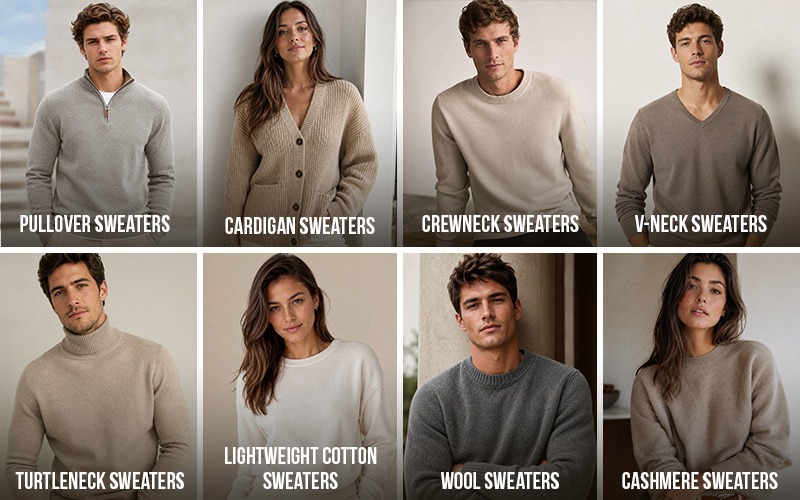
- Pullover sweaters - slip over the head, no front opening, the everyday classic.
- Cardigan sweaters - open front with buttons or a zip, easy to layer.
- Crewneck sweaters - round neckline, clean and versatile.
- V-neck sweaters - open V collar, great over a collared shirt.
- Turtleneck sweaters - high folded collar for extra neck warmth.
- Lightweight cotton sweaters - breathable picks for mild days.
- Wool and cashmere sweaters - warmer, softer, and more premium.
Common Sweater Materials
Material shapes how a sweater feels, costs, and performs. Wool brings warmth. Cotton knit, which is the primary fabric option for sweaters in YouApparel, stays breathable and soft. Merino wool feels fine and itch-free. Cashmere is the luxury option. Acrylic and polyester blends keep prices down and care easy, while synthetic blends add stretch and durability. In short, the fiber drives softness, warmth, stretch, breathability, and price.
What Is a Hoodie?
A hoodie is a sweatshirt or pullover-style garment with an attached hood. That hood is the headline feature. Most hoodies also carry a drawstring, a front kangaroo pocket, and ribbed cuffs and hem. The look reads casual and athletic, which is why hoodies dominate streetwear, campus style, and team gear.
Common Types of Hoodies
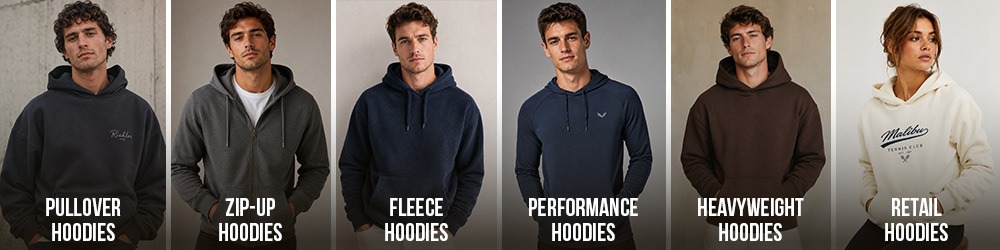
- Pullover hoodies - the standard one-piece front, no zipper.
- Zip-up hoodies - full front zip for easy on and off.
- Fleece hoodies - brushed interior for cozy warmth.
- Performance hoodies - lighter, moisture-wicking, made for activity.
- Heavyweight hoodies - thick fabric with structure and a premium, cozier feel.
- Fashion/retail hoodies - softer hand-feel and trend-driven fits.
Common Hoodie Materials
Hoodies usually start from cut-and-sewn fabric, not knit panels. Fleece is the most common, soft and warm. French terry runs lighter with a looped backing. Cotton-poly blends balance cost and durability. Heavyweight cotton adds structure. Moisture-wicking polyester suits active use, and loopback cotton gives a breathable, broken-in feel.
Sweater vs Hoodie: Main Differences
Here's the quick side-by-side.
| Feature | Sweater | Hoodie |
|---|---|---|
| Hood | No hood | Attached hood |
| Usually none | Often has kangaroo pocket | |
| Style | Polished, classic, dressier | Casual, athletic, streetwear |
| Material | Knit fabrics, wool, cotton, acrylic | Fleece, french terry, cotton-poly blends |
| Warmth | Depends on knit and material | Usually warmer due to fleece and hood |
| Best For | Office layering, smart casual wear, gifting | Casual wear, sports, events, uniforms, merch |
| Customization | Embroidery works well | Screen printing, embroidery, heat transfer, DTG |
| Bulk Buying Use | Corporate gifting, premium apparel | Promotional apparel, team wear, event merch |
Sweater vs Sweatshirt vs Hoodie: What Is the Difference?
People search "sweater vs sweatshirt" and "difference between sweatshirt and hoodie" constantly, which means the terms are still confused and interchanged. Here's the clean breakdown.
- Sweater - A knitted garment, often made from wool, cotton, cashmere, or synthetic knit materials.
- Sweatshirt - A soft pullover or zip-up garment, usually made from fleece, french terry, or cotton-poly fabric. It normally does not have a hood.
- Hoodie - A type of sweatshirt with a hood and usually a front kangaroo pocket.
Quick summary: all hoodies can be called sweatshirts, but not all sweatshirts are hoodies. Sweaters are usually knitted, while sweatshirts and hoodies are usually cut-and-sewn fleece or terry garments.
Fabric Comparison: Sweater Materials vs Hoodie Fabrics
Fabric is one of the biggest things separating these two. Sweaters live in knit territory. Hoodies live in fleece, blends, and terry. Here's how the common options stack up.
Common Sweater Materials
- Wool - warm and premium, a cold-weather staple.
- Cotton knit - breathable and soft for milder temps.
- Cashmere - a luxury feel with serious softness.
- Acrylic - an affordable stand-in for wool.
- Synthetic blends - durable and easy to care for.
Common Hoodie Fabrics
- Fleece - warm, soft, and the go-to for winter.
- French terry - breathable and lighter, good for layering.
- Cotton-poly blend - durable, affordable, and everywhere in bulk apparel.
- Heavyweight cotton - a premium feel with better structure.
- Performance polyester - moisture-wicking and built for activewear.
Which Fabric Is Better for Custom Printing?
For most logos and graphics, hoodies and sweatshirts win. Their smooth, even fabric gives screen printing, DTG, heat transfer, and embroidery a consistent surface to work on. Sweaters are trickier, since the knit texture can swallow fine detail. They shine instead with embroidery, patches, woven labels, and premium gifting, where texture is part of the appeal.
Sweater vs Hoodie for Promotional Apparel
Branded apparel, company swag, nonprofit events, trade shows, employee gifts - the right pick depends on the vibe you want.
Choose Hoodies When You Need Casual, High-Visibility Merch: Hoodies are the easy yes for casual, eye-catching merch. They land well with youth audiences, events, sports teams, fitness brands, campus stores, and laid-back company swag. For bulk runs, budget-friendly blanks like the Gildan 18500 and Hanes pullovers keep costs low. Styles like the 1454 Performance fleece hoodie from Badger add moisture-wicking comfort. In YouApparel, you can also find softer fashion options from Bella+Canvas and Next Level lift the retail feel.
Choose Sweaters or Crewneck Sweatshirts When You Need a Cleaner Look: For a more put-together look, reach for sweaters or crewneck sweatshirts. They suit corporate teams, office wear, executive gifting, and professional uniforms. A crewneck sweatshirt like the Independent Trading SS3000 or the garment-dyed Comfort Colors 1566 reads polished without going formal, while a knit from a premium label like Spyder works for higher-end gifts.
Best Decoration Methods
- Screen printing - Sharp and cost-effective for large runs.
- Embroidery - Durable and premium, great on chests and sleeves if the fabric is mostly cotton.
- DTG - Full-color detail for smaller batches and recommended for 100% cotton sweatshirts.
- Heat transfer - Flexible for complex art and names.
- Patches - More texture and a custom edge.
- Woven labels - Subtle branding inside or at the hem.
Flat chest and back areas are easiest to print on sweaters and hoodies when branding. But a sweater gets a whole other look with full frontal decorations. Hoodie pockets and front seams can crowd artwork, so plan logo placement around them.
Sweater vs Hoodie for Employee Uniforms
From a workwear angle, the choice often comes down to setting and safety.
When Hoodies Work Best
- Warehouse teams
- Delivery teams
- Outdoor event staff
- Fitness staff
- Casual retail teams
- Campus staff
When Sweaters or Crewnecks Work Best
- Office teams
- Hospitality
- Corporate uniforms
- Customer-facing staff
- Premium branded apparel
- Safety Considerations
Some workplaces skip hoodies on purpose. Drawstrings and loose hoods can catch on moving parts, which makes them a real hazard around machinery, logistics, and industrial sites. Food service often avoids them for hygiene and fit reasons, too. In those settings, a crewneck or knit is the safer call.
Sweater vs Hoodie for Corporate Gifting
Both can be great gifts. The right one depends on the audience and how the brand wants to come across.
Hoodies as Casual Corporate Gifts: Hoodies feel friendly and low-pressure. They're a strong fit for employee appreciation, onboarding kits, event giveaways, startup teams, and younger audiences who'll wear them often. The right hoodies can be worn year-round.
Sweaters and Crewnecks as Premium Gifts: Sweaters and crewnecks signal a step up. Use them for executive gifts, holiday gifting, milestone rewards, client gifts, and office-friendly branded apparel that people are proud to wear to work. Sweaters are not typically usable year-round, but their knit construction and functionality gives them high perceived value.
Gifting Tips
- Choose soft materials people actually want to wear.
- Offer inclusive sizing across the whole team.
- Use neutral colors that pair with anything.
- Keep logos subtle for a premium feel.
- Consider premium packaging for client and executive gifts.
- Pick decoration methods that match the fabric.
- Place bulk orders early
Weather Guide: When Should You Wear a Sweater or Hoodie?
Season matters as much as style.
- Best for Mild Weather: Lightweight cotton sweaters, French terry sweatshirts, and lighter hoodies handle cool-but-not-cold days without overheating.
- Best for Cold Weather: For real cold, go heavyweight. Fleece hoodies, wool sweaters, sweater jackets, thermal layers, and cotton-poly fleece. Outdoor brands like Columbia add weatherproofing on top of warmth.
- Best for Layering: Crewneck sweatshirts and sweaters slide under jackets cleanly, so they layer best. Hoodies add neck and head coverage, but the hood can bunch up and feel bulky under a coat.
Which Is Better: Sweater or Hoodie?
There's no single winner, as it comes down to the job.
- Choose a hoodie for casual comfort, warmth, activewear, events, and branded merch.
- Choose a sweater for a polished look, office wear, gifting, and dressier layering.
- Choose a crewneck sweatshirt when you want a balance between casual comfort and professional branding.
Frequently Asked Questions
Q. Is a hoodie warmer than a sweater?
Depends. Fleece-lined hoodies trap heat well, and the hood adds coverage. A heavy wool sweater can match or beat them, though, so it really depends on the fabric and weight.
Q. Can you screen print on a sweater?
You can, but the knit texture can blur fine detail. Embroidery, patches, and woven labels usually look better on sweaters. Smooth hoodies and sweatshirts are the safer bet for crisp screen prints.
Q. What's the difference between a sweatshirt and a hoodie?
A hoodie is a sweatshirt with a hood and usually a front pocket. A plain sweatshirt, like a crewneck, has neither. So every hoodie is a sweatshirt, but not every sweatshirt is a hoodie.
Q. Which is better for company logos, hoodies or crewnecks?
Both decorate well. Hoodies read casual and youthful while crewnecks read cleaner and more professional. Pick based on your audience and where your logo sits around the front pocket or seam.
Q. Are hoodies allowed as workplace uniforms?
In many casual settings, yes. But sites with machinery, food service, or strict safety rules often avoid drawstrings and hoods. A crewneck is a common compromise.
Q. Which is better for corporate gifts?
Sweaters and crewneck sweatshirts feel more polished, while hoodies feel more casual and trendy. The best choice depends on the audience and brand style.