


Custom Apparel Fundraising: The Complete Guide to Raising More with Branded Merchandise
By: YouApparel Posted on: Apr 1, 2026Hey, if people love a great t-shirt, selling a few custom ones is a great way to earn money for a cause right? Right you are, but it's not as easy as it sounds. Selling custom apparel is a powerful fundraising strategy because supporters receive a tangible item, and your cause gets a lot of exposure. And it doesn't necessarily have to be custom apparel either. A well-designed cap works too.But without a lack of unity among volunteers and donors, and without a community that's passionate about a cause like yours, custom merchandise won't get you far on your fundraising initiative.
This guide breaks down everything you need to know to run a profitable custom apparel fundraiser. Check out how you can choose the right garments, pick the best print methods, compare platforms, and price your gear to hit your fundraising goals.
Know Your Audience and Choose the Right Apparel Type
The first step to making your fundraiser successful is not just about knowing your audience. The audience, or donors, technically, should be the ones dictating what you should sell. If you can figure out what they want you to sell, you can cross the critical first step.
For this, you begin by building a donor profile. See if the profiles align with the specific event context you have in mind. If they do, you can now prepare a list of items you can sell.
People generally don't go this deep when running small-scale fundraisers. They just stock up on hoodies, crewneck sweatshirts, and standard tees for the event. The hoodies and sweatshirts appeal to the younger demographic. Everyone just loves tees. There are no complications. But what they neglect is fit preferences and niche segments in the donor base. Hoodies and tees may work in general. But if the event context is in a corporate setting, working professionals may want embroidered polos or caps instead. If the event will be attended by married women who are mostly homemakers, selling tote bags could be the right call because you are essentially offering them reusable shopping bags. If the event involves culinary aspects, people participating would obviously be interested in cooking. So aprons can be part of the merchandise.
The point is that building donor profiles and understanding the event context are the first steps to figuring out what to sell. Let the audience dictate that while you consider potential products and their use cases.
Here is an overview.
- T-shirts and Tank Tops: Items with a universal appeal and the easiest to design. Very low upfront cost.
- Hoodies and Sweatshirts: High perceived value and ideal for cooler climates and long-term wear.
- Polos: Helps build that "professional" vibe in business-backed campaigns. Embroidered polos have higher perceived value than printed ones. You can go for cotton-poly blends, full performance fabrics, or eco-friendly fabrics based on donor profiles.
- Caps and Hats: Merch items America's always loved. Great for outdoor events and teams. Embroidery or leather patches add a premium feel for higher sale prices. With adjustable caps, sizing issues are of no concern for buyers.
- Bags and Totes: Excellent event giveaways with a massive print area for sponsor logos.
- Aprons: Standard choice for food-related events with large branding areas, and pockets for functionality.
Fabric Durability and Considerations
Picking the right blank apparel is another top consideration.
When it comes to fabric, cotton has the highest perceived value. The benefit is that cotton fabrics also take a lot of customizations really well, particularly DTG, embroidery, and DTF.
If you can't stretch the budget too far, you can go for custom polyester apparel. Their inherent durability and moisture-wicking properties are a plus. Many customers in YouApparel over the past couple of years chose polyester t-shirts and sweatshirts for fundraising over cotton. Additionally, if the event is sports or fitness-related, polyester is the absolute standard.
But you don't have to go full polyester or full cotton either. Cotton-polyester blends aren't a bad call, if you prefer an all-around great choice for casual wear.
The factors to take into consideration here are:
- Garment lifespan
- Event context
- Budget constraints
- Preferred customization methods
- Sponsor logos to include
- Garment size restrictions
If your shirts serve as souvenirs for a single, one-time event, budget cotton or lightweight blends make more sense and won't strain your budget. If the merchandise is expected to last for years - like an alumni hoodie or varsity jacket - invest in heavier fabrics and durable print methods.
Choosing a Customization Method
If you don't have a preset budget for the fundraiser, you can work out how the design can get onto the fabric. Finalizing this will give you an idea of the budget you will need and help you plan out the timeline.
Here is a breakdown of the standard printing methods.
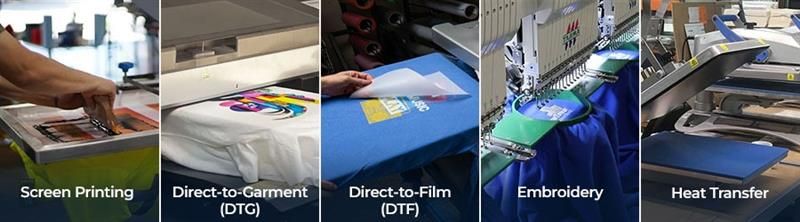
- Screen Printing: Best for bold designs with few colors and large bulk orders. However, the setup costs can be high making it only viable for larger quantities.
- Direct-to-Garment (DTG): Best for complex, full-color artwork and small runs. Works best on high-quality cotton. With the right custom apparel provider like YouApparel, you can buy them in bulk without setup fees.
- Direct-to-Film (DTF): Best for photos, gradients, and designs with many colors. DTF works on various fabrics including cotton, polyester, and nylon. It is highly suitable for small batches.
- Embroidery: Best for logos on polos, jackets, aprons, and caps. Embroidery offers a highly durable, professional look but carries a higher cost. Not a lot of embroiderers can get the details right. YouApparel specializes in embroidery, and fine embroidery detail is our forte.
- Heat Transfer: Best for small orders and multi-color photos, but requires an affordable setup. We don't recommend it for large bulk orders.
Promotional Apparel – Brand Recommendations
The right brand matters as the choice can directly impact the success of your fundraiser. Different donor segments will find specific styles more appealing. That's a fact. For example, if you're just going for basic cotton t-shirts, Gildan is pretty much the industry standard for buying blank t-shirts wholesale. They don't cost a lot, the quality is pretty reasonable for unsophisticated fundraising, and you can maximize profit margins rather easily.
But Gildan won't cut it if you want to outfit a booster club or youth league. This is where brands that serve team outfitting have to be considered. Like Team 365 and their selection of athletic wear in a variety of specific team colors.
Likewise, for high-energy events or fundraisers associated with fitness or sports, blanks for merchandise are best sourced from performance apparel brands like the budget-friendly Sport-Tek or the premium Nike. Wholesale brands like Port Authority and Core 365 offer several styles that donors fitting corporate profiles would find valuable. Port Authority dominates this specific category with professional polo shirts, classic woven shirts, and durable outerwear. Core 365 is a rather affordable alternative for corporate style.
If you are expecting a younger audience, you can find trendy, streetwear-inspired styles from brands like Independent Trading Company or Shakawear.
Quantity, Pricing, and Profitability
To assess profitability, we recommend determining the fundraising goals first and working backwards to decide quantity and retail price.
Bulk ordering drastically differs from print-on-demand (POD). It's best to order in bulk when you have a committed audience, such as a school selling spirit wear. Buying wholesale from reputed sources lowers your unit cost significantly and yields much higher profit margins. POD services let you launch with zero minimum order quantity (MOQ). This makes POD perfect for small or highly uncertain campaigns, but you sacrifice a large percentage of your profit to platform fees. This doesn't apply to YouApparel. Neither does MOQ.
We've had customers offering basic tees at a $20 entry point in their fundraisers. Embroidered hats or heavyweight hoodies customized at YouApparel have yielded $50 per piece or more at fundraisers. Feel free to talk to our Customer Support team for a walkthrough.
There is something else you can do. You can leverage sponsorships to cover your base costs. See if you can find sponsors for the event in return for printing their logo on the apparel or a tote bag, for a fee of course. If that fee covers your blank apparel purchase, every single item you sell goes directly to your charity as pure profit.
Comparing Platforms and Vendors
You have two main paths to get your shirts printed: Print-on-demand networks or bulk wholesale distributors.
Print-on-Demand Platforms: Platforms like Printify operate as a global print-on-demand network. The site offers an intuitive design tool where you can upload artwork, add text, and apply filters. Printify provides a large catalog of styles and handles global shipping via a network of print providers. You can start campaigns with no minimum order. This suits small nonprofits looking for completely hands-off fulfillment.
Platforms like Custom Ink serve as a dedicated free fundraising platform where you can create a design, set the price, and define an end date. They can generate a campaign page for you. Supporters order directly from that page. The company handles payment processing, printing, and delivery. They send the final funds directly to your beneficiary.
Wholesale Distributors (Bulk Ordering): If your group prefers to manage fulfillment directly and wants to maximize profit margins, wholesale ordering is the smarter decision. Authorized wholesale resellers like YouApparel offer high wholesale prices with no minimum order requirements and massive bulk discounts. You can choose from over 100 brands and 1000+ products. In YouApparel, you can design your gear using our free online Custom Design Creator tool and check out securely. We provide fast shipping from 15 different warehouses and feature an easy returns process. Buying blank or custom gear directly from YouApparel cuts out the middleman platform fees entirely, enabling you to yield more profit every step of the way.
For budget-friendly basics and a vast selection of corporate apparel, you can explore ShirtsBargain, which offers similar powerful benefits. Featuring wholesale pricing, zero minimums, and bulk discounts, ShirtsBargain also utilizes a simple three-step process: pick a product, design with a free tool, and place the order.
If you're settling for headwear merchandise, we recommend CapBargain - a wholesale reseller of OTTO CAP specializing strictly in headwear for any budget. OTTO CAP manufactures exceptional blank snapbacks and trucker hats that hold front embroidery beautifully. And at CapBargain, you get these blanks at no minimum orders, unbeatable per-unit prices, and fast shipping from different warehouses. They have sold over 10 million hats and have been serving customers planning fundraisers for over a decade, with impeccable expertise in cap embroidery.
Running a Successful Apparel Fundraiser
Here are a few pointers and tips.
- Decide on your cause and set a strict campaign timeline.
- Include a compelling photo or video to help your fundraiser perform better.
- Work on a campaign story to explain exactly why you are raising funds and how the supporters' purchases make a direct impact.
- Keep the designs simple and emotionally resonant.
- If you plan to use screen printing, limit your design to one or two colors to keep your production costs low.
- Share your fundraising page link via email, social media, and local community channels.
- Encourage your early supporters to post photos wearing the apparel online.
- Local distribution saves your buyers from heavy shipping fees, making them more likely to purchase.
- After the campaign closes, thank your supporters publicly.
- Report your progress against your initial goal.
Legal and Tax Considerations
You must clarify whether your apparel revenue is treated as a donation or a standard retail sale. Consult local tax laws early to avoid surprises. Some jurisdictions require you to collect and remit sales tax on physical goods, even for nonprofits. If you use platforms like Custom Ink, check their FAQ for their specific tax handling procedures.
For registered 501(c)(3) charities, you must issue proper receipts if a portion of the payment qualifies as a tax-deductible donation. If a shirt costs $10 to make and you sell it for $25, only the $15 profit might be considered deductible. We recommend seeking professional accounting advice for your specific situation. Be highly transparent with your buyers about exactly what percentage of their purchase goes directly to the cause.
Conclusion
Custom apparel fundraising turns your supporters into active advocates. Match your apparel choices to your specific audience. Pick t-shirts for casual events, hoodies for youth groups, and polos for professional donors. If you have an established audience, ordering in bulk from wholesale apparel sources offering customization services like YouApparel will dramatically increase your total funds raised.
The right design, printed on the right garment, sold at the right price, will guarantee your next fundraiser is a massive success.
Start designing your merchandise today with YouApparel and let us help you make it profitable.