


High Visibility Safety Vests Explained with ANSI Classes Colors, and Real Work Examples
By: YouApparel Posted on: Nov 13, 2025Buyers get a field-tested walkthrough of safety vest basics and advanced choices. We decode ANSI/ISEA 107 types and classes—Type O, Type R, Type P; Class 1, Class 2, Class 3—and when to choose class two or class three for visibility. Materials and builds covered include mesh or solid polyester, modacrylic FR, fire-retardant finishes, microprism reflective tape, zipper or hook-and-loop, and five-point breakaway. Compare safety vest with pockets, tactical and tool vests, lightweight, cooling or insulated picks, women’s fits, and colors from orange and yellow to black, blue, pink, and green. Includes custom safety vest options, running and cycling use, bulk pricing, and trusted brands like Kishigo at YouApparel.
Thousands of workers, especially in construction and roadworks, step onto job sites wearing bright orange and fluorescent green vests. With these colors, the garments are engineered to make the wearer visible from afar. Safety vests are vests specifically crafted to communicate critical information through color, design, and reflective materials. Before exploring YouApparel’s wholesale vests collection, a good understanding of safety vests can help you make your purchasing decisions smarter and more reliable for your crew.
Why High-Visibility Vest Matters
The primary trait of a safety vest is enhanced visibility. High-visibility safety apparel considerably lowers the occurrence of workplace accidents and is mandatory for the most dangerous occupations in high-risk environments. For example, OSHA requires workers exposed to traffic or moving equipment to wear garments like vests or even high-visibility hoodies so they are visible from afar. What matters is wearing the right vest - one with practical features, comfort, and safety features.
YouApparel’s wholesale apparel selection features a brand that specializes in safety apparel, including blank safety vests - Kishigo. Since 1971, Kishigo has set the standard for American-made safety apparel.
Their Premium Brilliant Series 1510-1511 Heavy Duty Class 2 Vest exemplifies professional construction with ANSI Class 2 compliance, polyester mesh, 2-inch reflective striping, and six pockets. Reinforced webbing and precision reflective placement explain why municipalities and contractors trust Kishigo.
Kishigo specializes in advanced technical features, having delivered iconic feature-rich styles like the JS154 Class 3 Pullover Hoodie and the 1584 Ultimate Reflective Vest. You can choose based on the safety colors you need, the nature of the job, and the work environment.
Decoding Safety Vest Colors
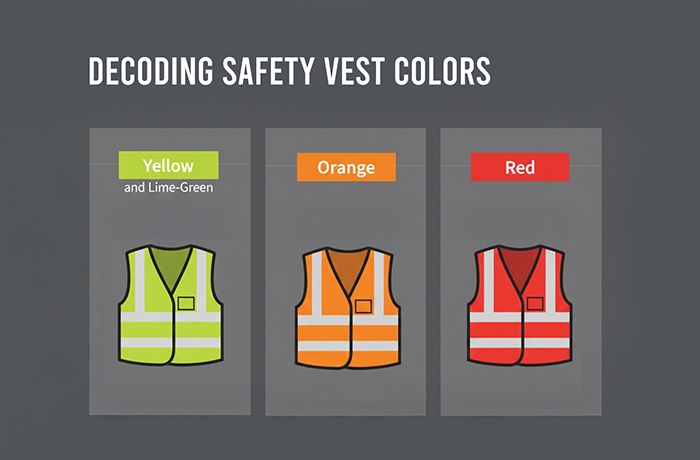
Yellow and Lime-Green is the most common color used by cyclists, crossing guards, warehouse workers, and road crews. When buying wholesale hi-vis apparel, yellow remains the default for general-purpose applications.
Orange stands out against construction equipment, yellow road signs, and earth tones. Road crews, surveyors, and utility workers prefer orange for visual distinction.
Red signals emergency situations. Firefighters, incident commanders, and hazmat workers wear red to distinguish their roles during crisis response.
Non-ANSI Colors like blue and green work for internal identification. Blue is common among security personnel, green is often seen worn by first-aid responders. For safety vests that are ANSI-compliant and non-ANSI fitting various budgets, we recommend checking out the hi-vis workwear collection in ShirtsBargain, which features brands like Port Authority and CornerStone.
Understanding ANSI Classes and Types
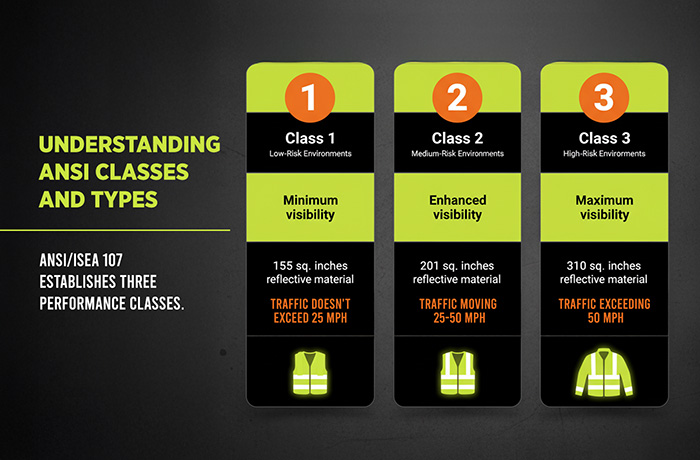
ANSI/ISEA 107 establishes three performance classes.
- Class 1 provides minimum visibility for low-risk environments. Parking attendants and warehouse workers wear Class 1 vests with 155 square inches of reflective material where traffic doesn't exceed 25 mph.
- Class 2 is required when workers face traffic moving 25-50 mph. These include 201 square inches of reflective tape for 360-degree visibility. Road crews and utility workers depend on Class 2 protection.
- Class 3 offers maximum visibility for workers exposed to traffic exceeding 50 mph, featuring sleeves with 310 square inches of reflective material. Highway crews and flaggers need Class 3 garments.
Kishigo offers durable safety vests that deliver Class 2 and Class 3 compliance, and a few features to make things easier on the job, like patch pockets, mic tabs, reflective tapes, etc. Class 2 safety vests and Class 3 safety vests from Kishigo in YouApparel come in a variety of price ranges, too.
Type Designations include Type O (Off-Road) for mining sites, Type R (Roadway) for traffic exposure, and Type P (Public Safety) for law enforcement with specialized features.
Materials That Make the Difference
Mesh vs. Solid Polyester: Mesh vests are primarily meant to offer breathability for hot weather, while solid polyester offers durability and logo space. Many vests combine solid fronts with mesh backs.
Modacrylic: This inherently flame-resistant fiber doesn't melt or drip, ideal for electrical workers, welders, and petrochemical professionals. It maintains protection through repeated washing.
Flame-Retardant (FR): FR-treated polyester self-extinguishes when flame is removed, but may melt under extreme heat. These cost less than modacrylic while meeting NFPA standards.
About Closure Mechanisms
Zipper Fronts are the most secure kind of closure. Hook-and-Loop allows the vests to be worn quickly and adjusted its size. Five-Point Breakaway designs detach under pressure, which will be useful if machine entanglement is a potential risk. Snap Fronts work reliably with gloved hands. Many Class 2 breakaway vests combine convenience with protection.
Importance of Reflective Details in Safety Vests
Most ANSI vests feature 2-inch reflective tape positioned horizontally and vertically, creating a human outline. Microprism tape offers 66% efficiency versus glass beads’ 28-30%. Microprism tapes appear much brighter in headlight beams. Premium vests use this technology for enhanced nighttime visibility. For 360-degree coverage requirements, make sure the jacket or vest’s reflective placement makes wearers visible from all directions. The best safety vests will have not just reflective details but also features to match.
Additional Useful Features of Safety Hi-Vis Vests: Pockets & Storage
Safety vests and jackets can come with a range of additional features for practical use and convenience. Brands like Kishigo have been in the market long enough to know the practicality of safety vests for various job applications. The brand offers various types of high-visibility blank safety vests to wear at various kinds of worksites - like Surveyor vests, Construction vests, Heavy Duty vests, Mesh & Mesh Contrast vests, and more.
Surveyor and most other types of vests include:
- Chest pockets with mic tabs for radios
- Two-tier pencil pockets for instruments
- Lower cargo pockets for gloves and tools
- Inside patch pockets for phones
- Clear ID windows for credentials
- Back document pockets for maps
Select safety vests with pockets based on your team's equipment needs.
Industry Applications of Safety Vests: Breakdown
- Construction and Road Work require Class 2 or 3 vests. Orange safety vests are commonly preferred.
- Flaggers can use Class 3 lightweight vests for both freedom of movement and visibility.
- Warehouses use Class 1 vests for forklift operators, where colored vests distinguish departments.
- Surveying professionals need vests with pockets. The Kishigo 1510 combines Class 2 visibility with six pockets.
- Public Safety uses Type P vests.
- Recreational cyclists and runners can wear lightweight reflective vests for personal safety.
Cost and Value Considerations
Entry-level Class 2 vests in YouApparel start at $3.46 per unit, with the bulk discounts reducing the per-unit price further to up to $2.99. Premium surveyor vests like the S5000 from Kishigo with better material quality and longer lifespan run $69.17 and can go as low as $64.40 on bulk purchases.
These prices can go down during seasonal sales and special sales in YouApparel. Bulk Purchasing reduces costs by 20-30%.
Wholesale safety apparel suppliers like YouApparel offer volume discounts and don’t have minimum order quantities for blank safety vests. Customization through embroidery or screen printing from YouApparel adds a few more dollars per vest, offering maximum value on bulk custom orders with the lowest overall customization costs. Our custom apparel services are streamlined to ensure fast decoration and delivery without compromising on quality. You can get custom safety vests to outfit a large team at minimum investment, but top quality from YouApparel.
Key Innovations and Technology
- LED-Integrated Vests add battery-powered strips. USB-rechargeable batteries can last 8-12 hours.
- Cooling Technologies uses phase-change materials. Advanced insulated vests may incorporate hydration packs.
- Smart Wearables monitor vital signs, location, and conditions. Temperature sensors alert supervisors to heat risks.
- Sustainable Materials: Some Kishigo safety vests in our wholesale collection use recycled materials, reducing carbon emissions significantly.
- Reflective Yarn woven into fabric maintains visibility after 50+ washes.
Making Smart Decisions
- Match the ANSI class to work risks.
- Choose materials for your climate.
- Calculate total ownership cost.
- Select pockets that eliminate extra belts.
- Prioritize established brands like Kishigo.
Safety vests communicate professional standards, compliance commitment, and worker value. Understanding colors and reflective stripes helps you make informed decisions protecting your team and business.
Frequently Asked Questions
Q. How do I know if a vest meets ANSI/ISEA 107 standards?
Look for several indicators when verifying ANSI compliance like labels or tags stating “ANSI/ISEA 107” and type designation (O, R, or P). You can also assess the quality of reflective tape - whether it’s bright enough and uniform. It’s also a good idea to buy safety vests from established brands like Kishigo, CornerStone, etc. as these manufacturers consistently deliver ANSI-compliant garments. Non-ANSI vests are simply brightly colored garments without reflective tape and should not be used in OSHA-regulated environments.
Q. What does Type O, Type R, and Type P mean in safety vest classifications?
Type designations indicate the intended work application, separate from Class ratings. Type O for Off-Road are garments designed for controlled environments where traffic speed is limited. They are typically in Class 1 configuration. Type R for Roadway are garments for workers exposed to traffic on public roads and highways. This is the most common type for road crews, utility workers, and emergency responders. Type R vests are available in Class 2 and Class 3 configurations. Type P for Public Safety is specifically designed for law enforcement, emergency medical services, and fire departments. These vests feature specialized reflective patterns and may include additional pockets for equipment, radio holders, or ID panels. Type P vests often come in Class 2 or higher. Municipalities purchasing for police and emergency services typically require Type P designation.
Q. Are flame‑resistant vests different from fire‑retardant vests?
Yes. They are made of two fundamentally different materials with different protection levels. Flame-resistant vests or “flame vests” as they are sometimes referred to, are made from inherently flame-resistant fibers like Modacrylic, Nomex®, or Indura®. The fiber itself doesn't burn, melt, or drip when exposed to flame. FR vests self-extinguish when the flame source is removed. Modacrylic is the most common and affordable FR option. Fire-retardant vests use standard polyester treated with chemical fire-retardant coatings. The base fiber is polyester, which will melt if exposed to intense heat. However, the chemical treatment causes the fabric to self-extinguish when flame is removed. The protective coating degrades with each washing, requiring manufacturer-specified washing protocols to maintain efficacy.
Q. Should I choose a mesh vest or a solid‑fabric vest for my job?
This decision depends on your work environment, climate, durability needs, and customization plans. Mesh vests are ideal if the weather is hot and you want breathability. But it typically isn’t durable, unless you invest more on offerings from reputed brands. Solid Polyester or combination vests are really durable, and typically withstands entanglement. Solid front and mesh back is more balanced but heavier. It offers more heat retention but costs slightly more comparatively.
Q. Is a non‑ANSI vest acceptable for warehouse work?
It depends. For internal warehouse use where forklifts don't operate, non-ANSI colored vests work fine for identification. However, OSHA recommends Class 1 vests for forklift areas and anywhere workers face equipment or traffic. Non-ANSI vests are bright colors without reflective tape. So they won't protect workers near moving machinery.
Q. Which color is best for high‑visibility vests in low‑light conditions: yellow or orange?
Yellow performs slightly better in total darkness due to superior fluorescence. However, both yellow and orange meet ANSI standards. For nighttime work, choose vests with retroreflective tapes over color.
Q. Can I use blue or green vests on a construction site?
Not for OSHA-regulated work. Blue and green are non-ANSI colors used for identification only (security, first aid, park rangers). Construction sites require ANSI Class 1, 2, or 3 vests in yellow, orange, or red. Using blue or green instead risks regulatory violations and worker safety.
Q. Can I wear a safety vest over a reflective jacket at night?
Yes. Layering a safety vest over a reflective jacket increases visibility. However, ensure the vest's reflective stripes aren't obscured by the jacket. The vest stripes should be over open areas or you can let them extend beyond the jacket. There should be maximum visibility for reflective material from all directions.
Q. Are there safety vests designed for cold weather?
Yes. Insulated vests and quilted vests are available that maintain ANSI compliance while adding warmth. These typically use solid polyester with insulation layers. Look for adjustable side straps (4-6 inches) to fit over heavy winter coats. Some have removable linings for seasonal flexibility. FR-rated insulated vests are available for extreme cold in high-risk environments.